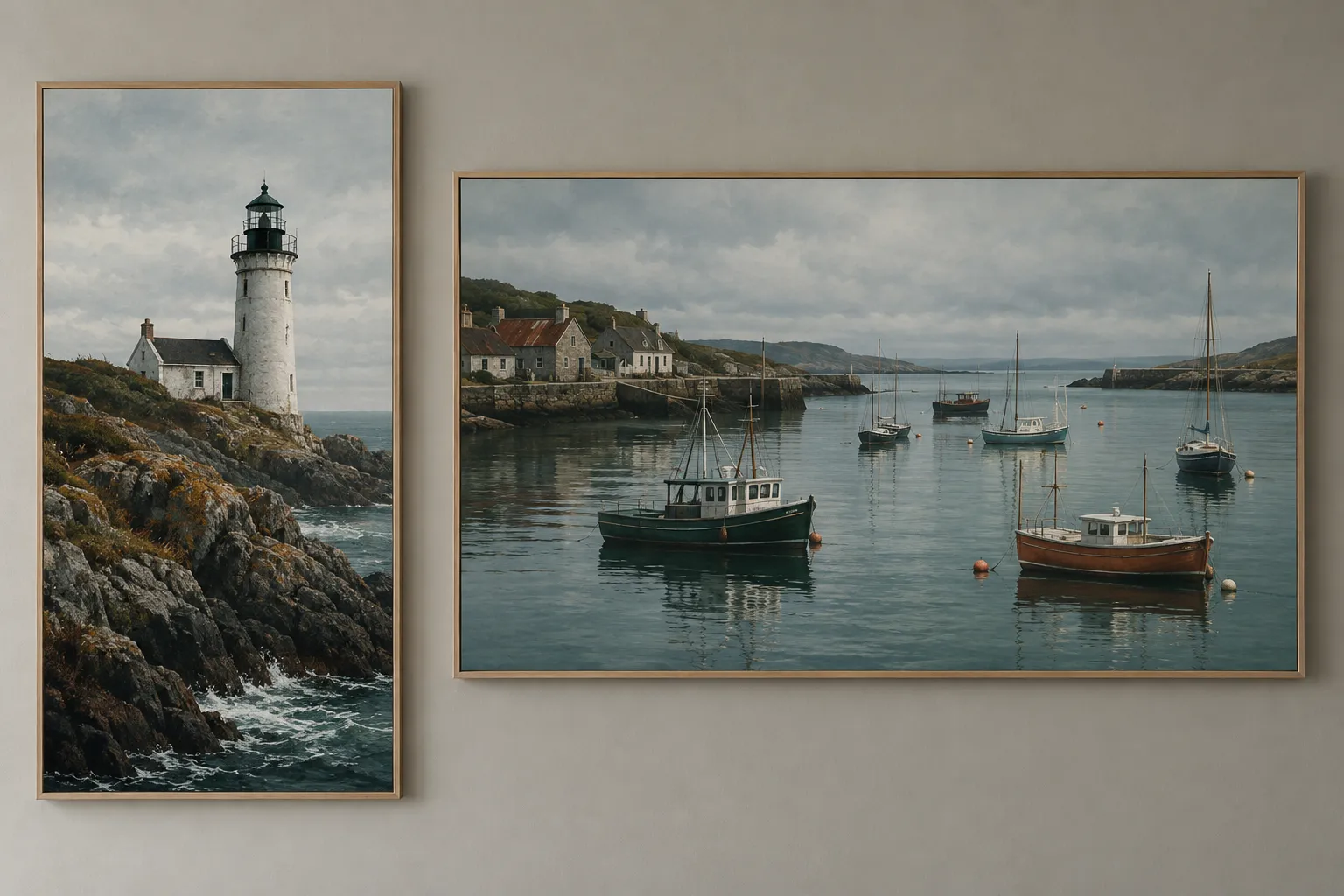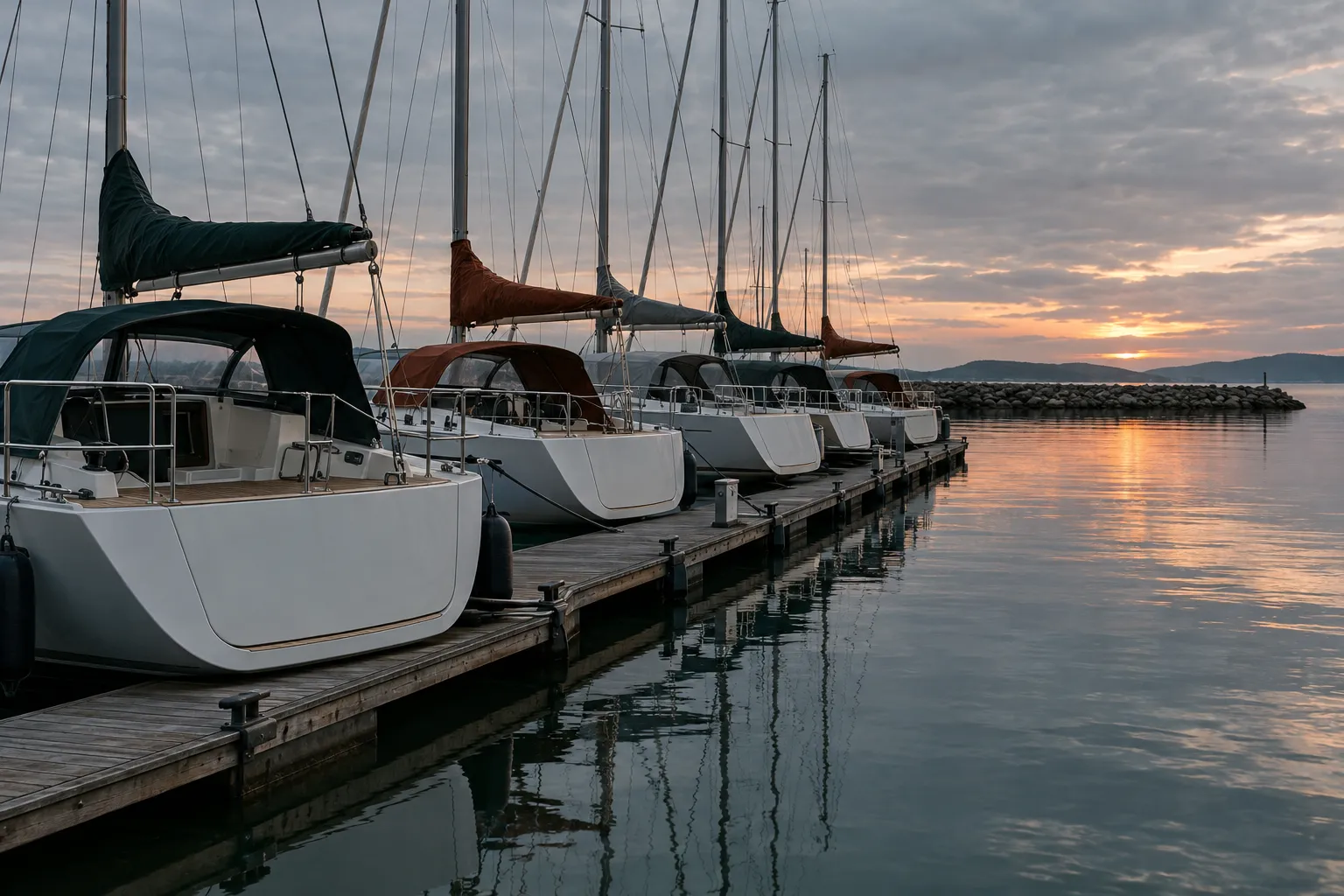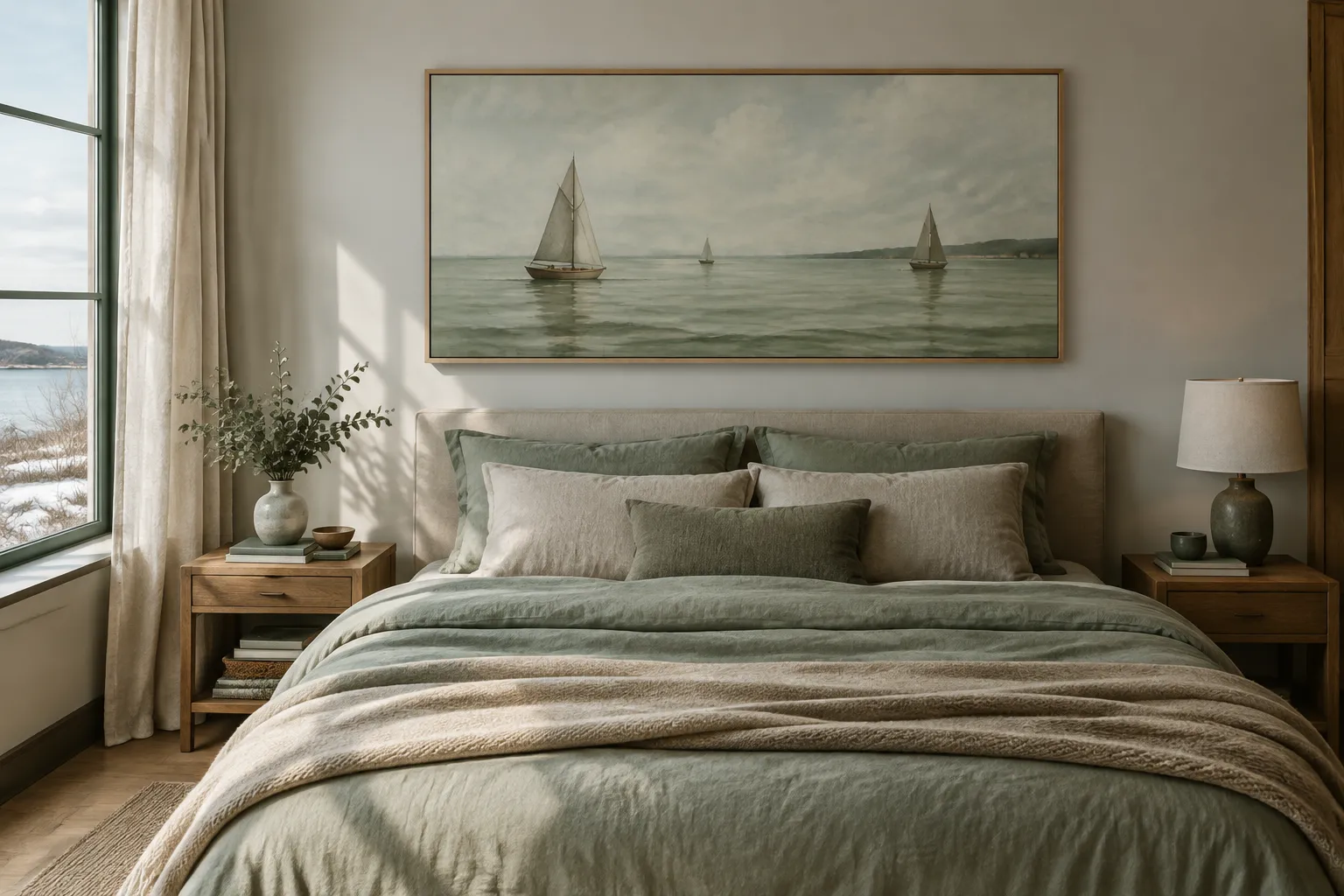
These guides are the practical side of Still & Wake. They help you take a good photograph of a boat, choose a size that suits your wall, and learn enough boat words to say exactly what you want.
Know the boat
Types of boats runs from dinghy to schooner, with a table you can scan in a minute. Ship vs boat settles where one ends and the other begins, with the dictionary and the law side by side. Parts of a boat names the hull, keel, transom and rigging, and nautical terms explains port and starboard, tacking and gybing, mooring words and the everyday phrases that came ashore from the sea.
Make the decisions in a useful order
First choose the subject you want to keep. For a boat of your own, find the original photograph and check what is visible around the mast, bow and stern. Then think about the wall. A photograph that works across a wide screen may need a different crop for a narrow space beside a door.
Use the size guide with that space in mind, then return to the photograph. Compare a temporary crop with the whole scene before settling on one. You can make these choices without buying anything, and keeping the original file means you can change your mind about the crop later.
Get the picture right
Boat photography for prints starts with the original file, then covers leaving room for the mast and bow, picking the angle that says "their boat", and waiting for good light. The motorboat portrait guide shows which details of a hull and its windows make a portrait look like the right boat. Print sizes and frames gives A4, A3, A2 and 50x70 cm in millimetres, with all four drawn to scale.
Put it somewhere
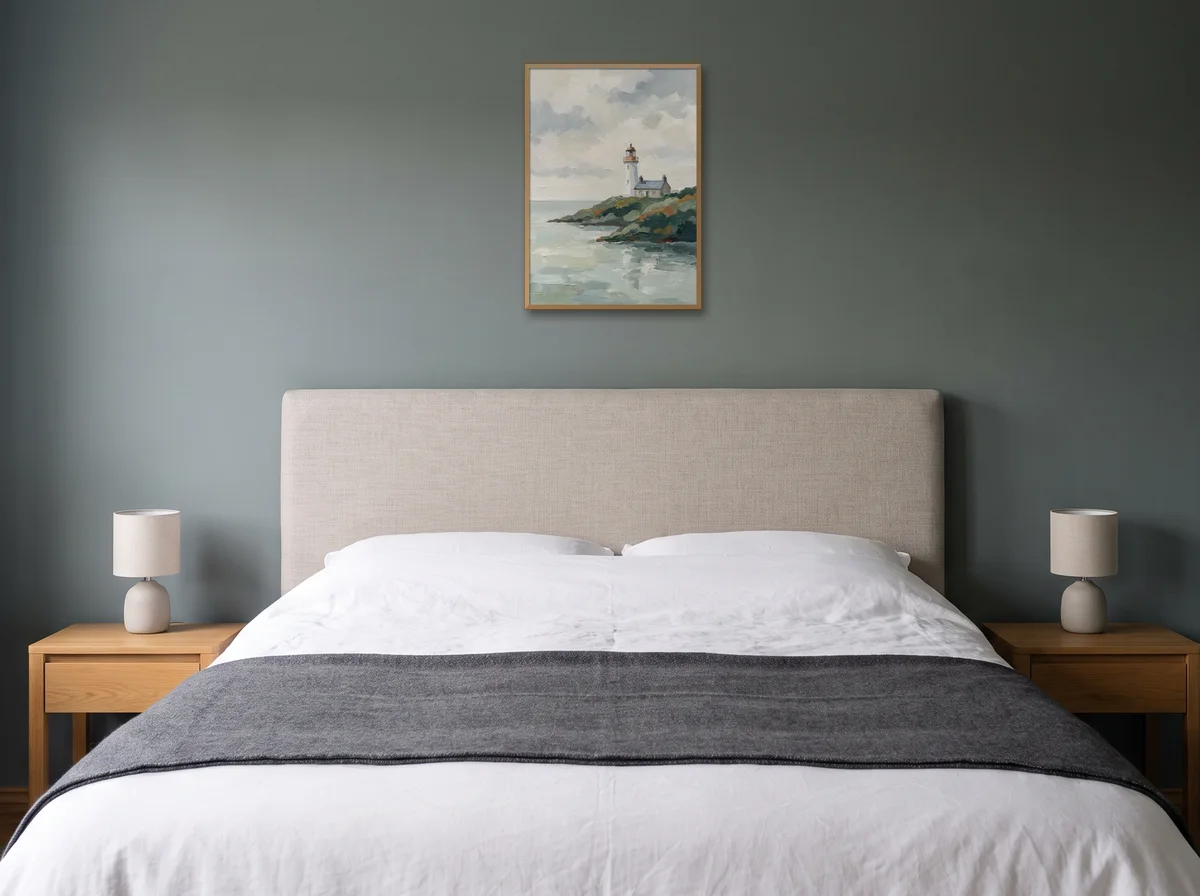
Coastal bedroom ideas deals with sea colours, natural textures, and choosing one picture for above the bed at the right size. Gifts for sailors starts with five quick picks, then explains how to choose for the sailor you know.
Choosing for someone else
For a gift, start with the boat they sail or the water they return to. Our gift guide separates pictures, books, courses and days out, so you can compare a present for the house with something they would use afloat. Knowing the kind of boat is more useful than guessing from a general interest in sailing.
If you need a photograph without spoiling a surprise, ask the person who took it for the original file and permission to use it. A small image copied from a message may not give you the same print choices. Someone who knows the recipient's room can help check the wall space while you keep the picture itself a surprise.
Before uploading, look at the file at full size. Check that the boat's name, window edges and rigging still read clearly, and keep a second photograph nearby for comparing the details in a portrait preview.
If you already have a photo of your own boat, boat portraits explains both routes: print the photo as it is, or see it as a painting first.