Start with the original file
Open your photo library and find the image itself. A screenshot of that image, a thumbnail sent through a messaging app or a copy saved from social media may contain far fewer pixels. Ask the person who took it to send the original file or a full-size download. Keep that original even if you make an edited copy.
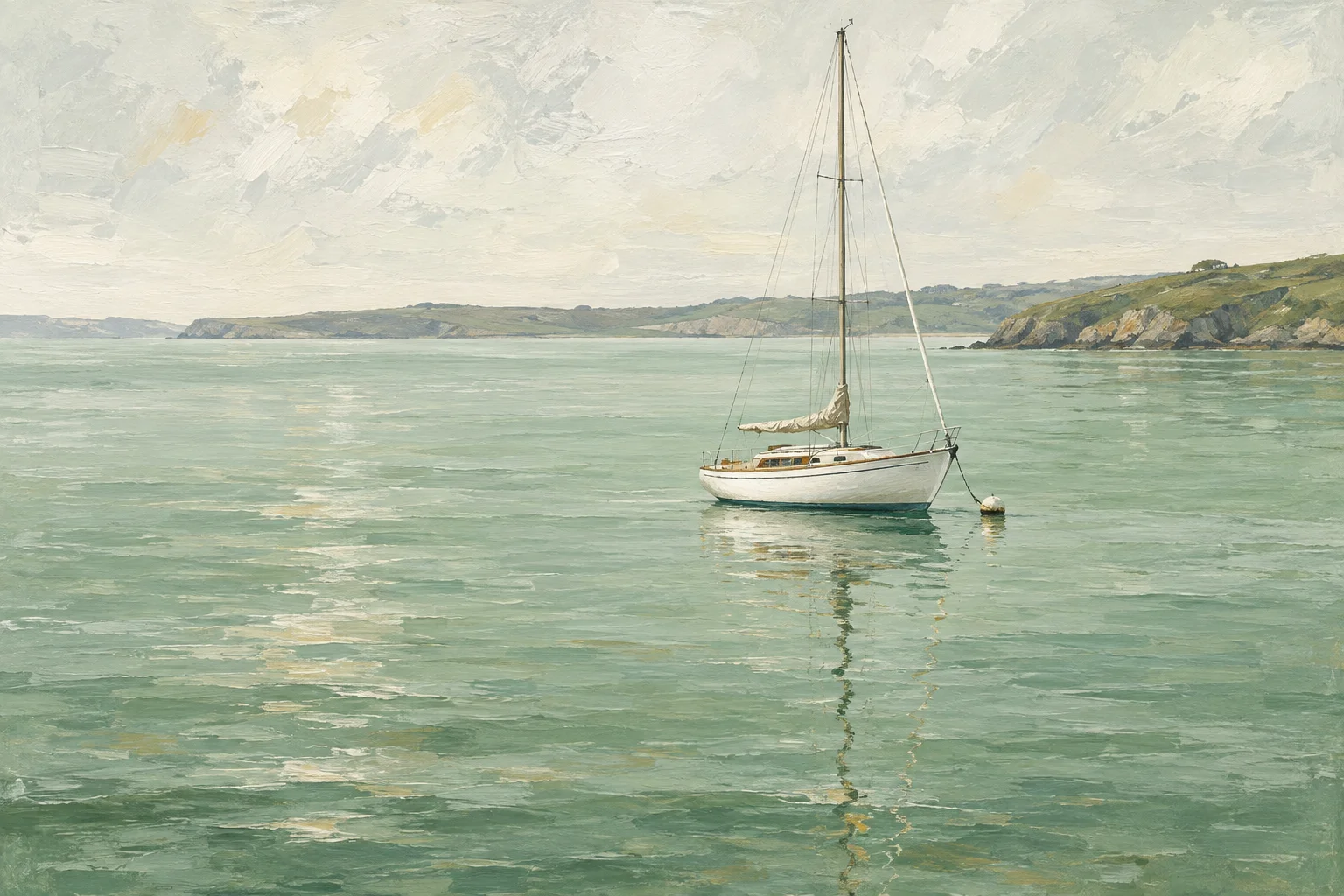
Look at the boat at full size on your screen. Check the edge of the hull, the cabin windows and the rigging. If those details look smeared, shaky or heavily sharpened already, a larger print will make them more obvious. Adding pixels cannot recover detail that was never captured.
Leave the mast and bow some room
A tight crop can feel dramatic on a phone and awkward inside a frame. Leave space above the masthead, in front of the bow and below the reflection. A portrait-format photograph often suits a tall rig; a broadside motorboat image usually has a natural landscape shape. Neither needs to be forced into the other.
Do not crop tightly before uploading. You may want that extra water when adjusting the final composition. Our size and framing guide explains how the shape of the image affects the finished print.
Choose the angle that says “their boat”
A three-quarter view often shows both the bow and the cabin or cockpit. A broadside view makes the hull line and sail plan easier to recognise. A photograph from astern can work beautifully if the stern, swim platform or wake is what makes the memory. Choose the view the owner loves, rather than a technically impressive photograph of an unfamiliar side.
Busy moorings are part of real boating. If ropes, another mast or a neighbouring vessel cross the subject, try a second photograph with a little separation. AI may reinterpret an overlapping detail instead of correctly untangling it.
Look for light before weather
Bright overcast light can show white hulls and cabin detail without hard shadows. Low sun brings warmth to timber and highlights the texture of water. Strong backlight can turn the boat into a silhouette: beautiful if that is the point, less helpful if you want the fittings visible.
The Dinghy Cruising Association's photography guide suggests watching the light and collecting smaller details that tell the story of a trip. That could be a reflection, a coiled line or the shape of a bow. A boat portrait does not have to record an entire coastline to mean something.
Choose fidelity or interpretation
A direct photo print preserves the photograph without an AI art treatment. An AI portrait can change colour, texture and small structural details. Inspect the preview for extra stays, altered windows, duplicated railings or a changed hull shape. The owner will spot those differences.
Use a photograph you took or have permission to reproduce. A professional race photograph may need a separate print licence. Finding an image online does not establish permission.
Keep the camera secondary
Choose a photograph from an existing trip, or take one from a safe position ashore. Do not compromise boat handling for a picture. The RNLI's sailing and motorboating guidance is the appropriate starting point for safety afloat; this article is about selecting a picture, not planning a passage.