Directions on a boat: port, starboard, bow, stern
Port is the left side of a boat as you face forward. Royal Museums Greenwich says it replaced the older word "larboard". Starboard is the right side, from the Old English "steorbord", the side the steering oar hung on.
Bow is the front of the boat and stern the back. Sailors use these words, RMG explains, because everything aboard must be identified clearly and quickly, and "left" and "right" depend on which way you're facing.
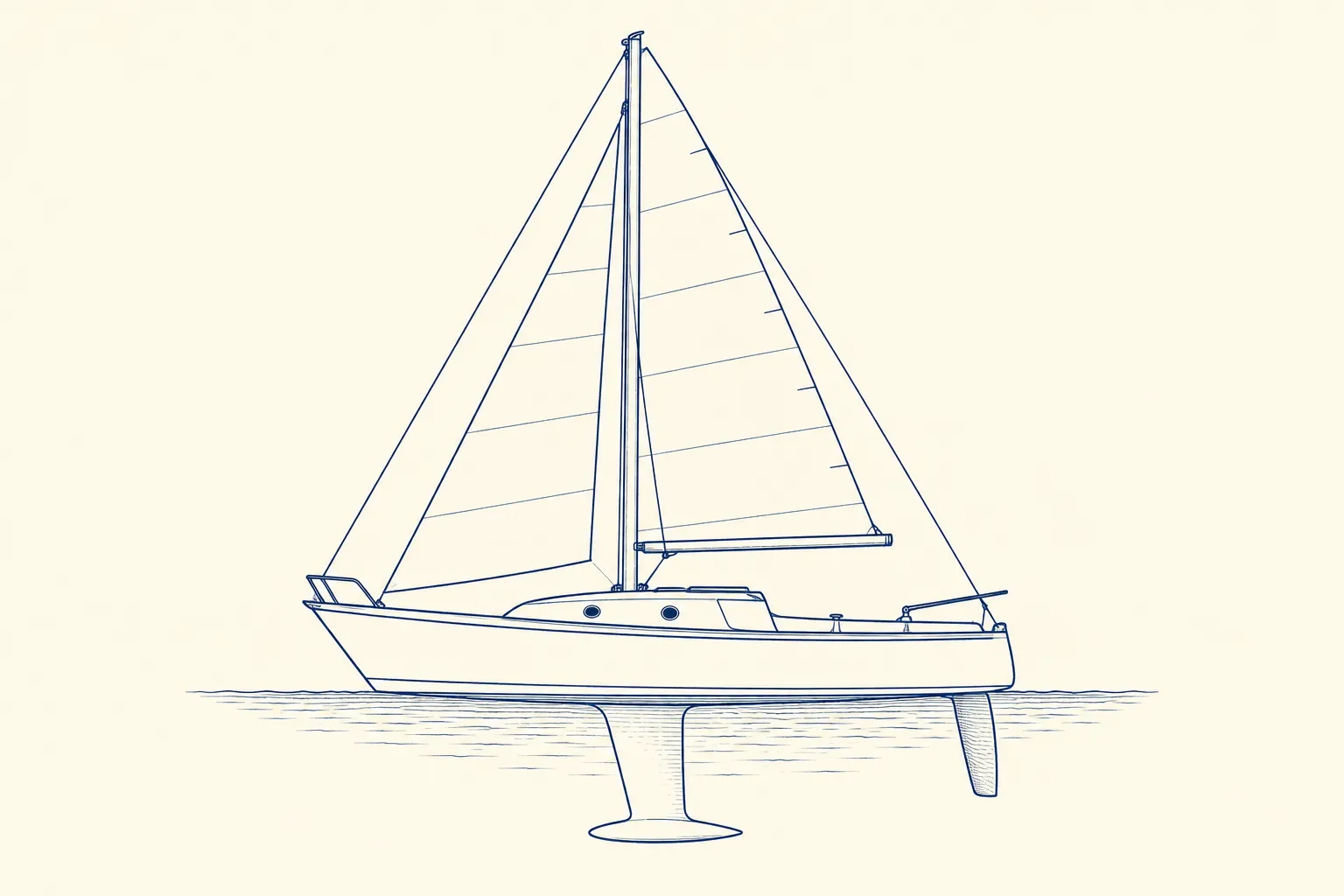 BowStern
Sailing terms: tack, gybe, luff and reef
Tack: the RYA describes tacking as turning through about 90 degrees from close-hauled to close-hauled, through the no-go zone. The wind then comes over the other side of the boat.
Windward: the side the wind is coming from. The collision regulations define the windward side of a sailing vessel as the side opposite the one its mainsail is carried on.
Gybe: the opposite turn. With the wind behind, Collins describes the sail swinging suddenly across to the other side.
Luff: the front edge of a fore-and-aft sail. As a verb, to luff is to steer into the wind so the sails flap.
Reef: to make a sail smaller by gathering part of it in.
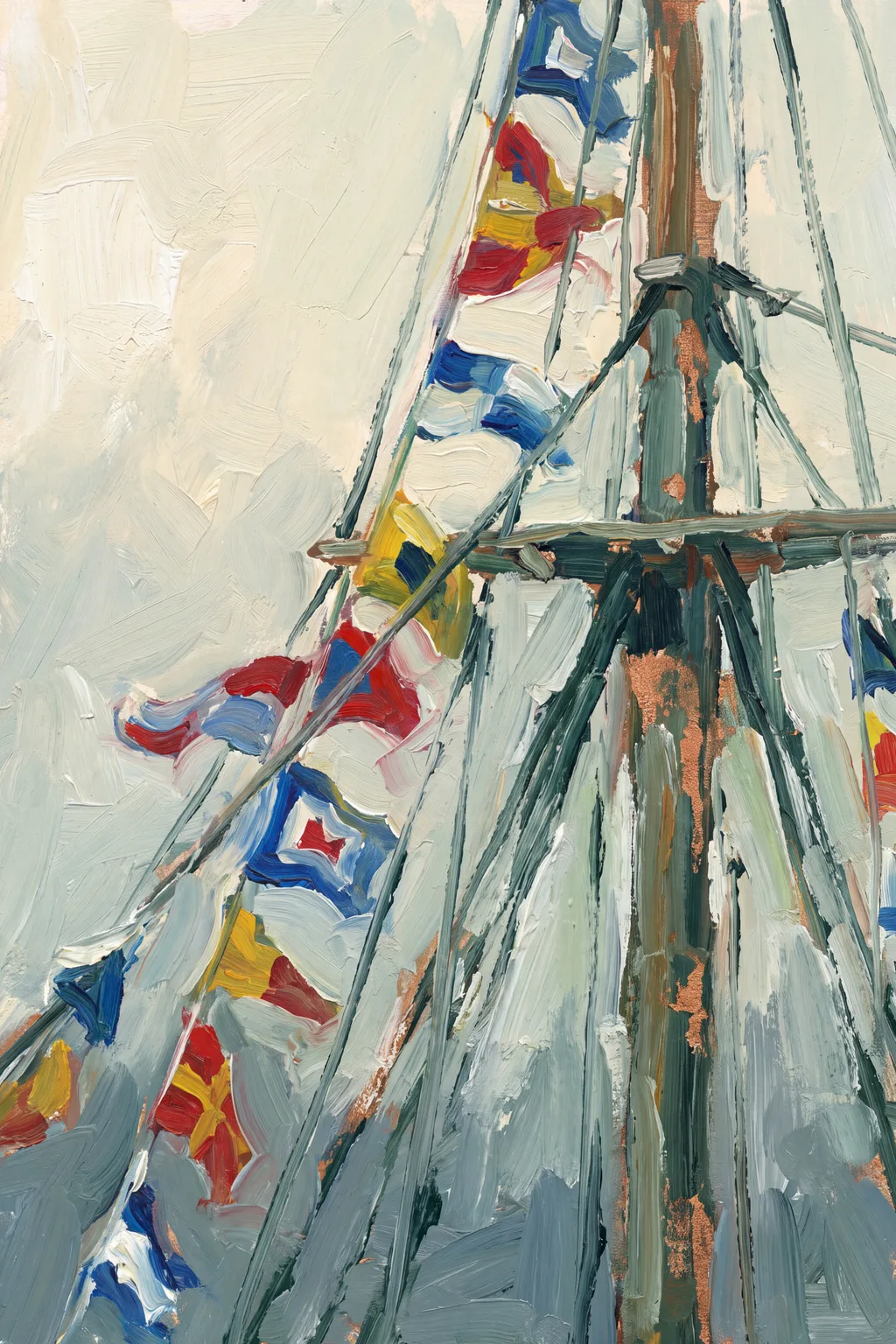
Our nautical prints include signal flags, ropes and a ship's compass, if the words make you want the pictures.
Mooring and anchoring terms
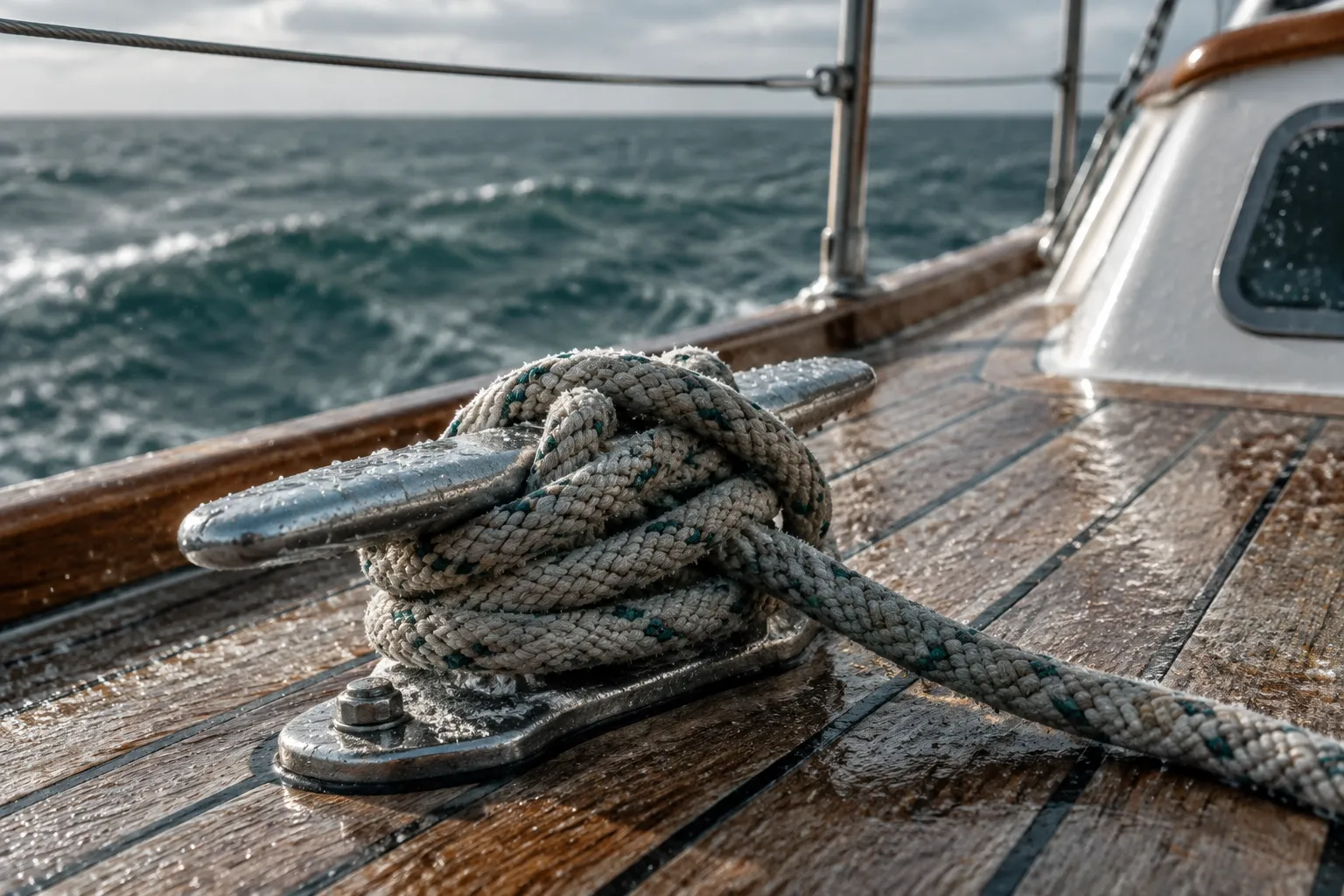
Cleat: a fitting with two horns, used to make a rope fast. Painter: the RYA uses the word for the line on a liferaft. It must be secured to a strong point, because it sets off the inflation.
Speed and distance at sea
Knot: Royal Museums Greenwich defines it as a unit of speed equal to one nautical mile per hour. Nautical mile: in UK law, 1,852 metres. RMG adds that it equals one minute of latitude.
On board: galley and heads
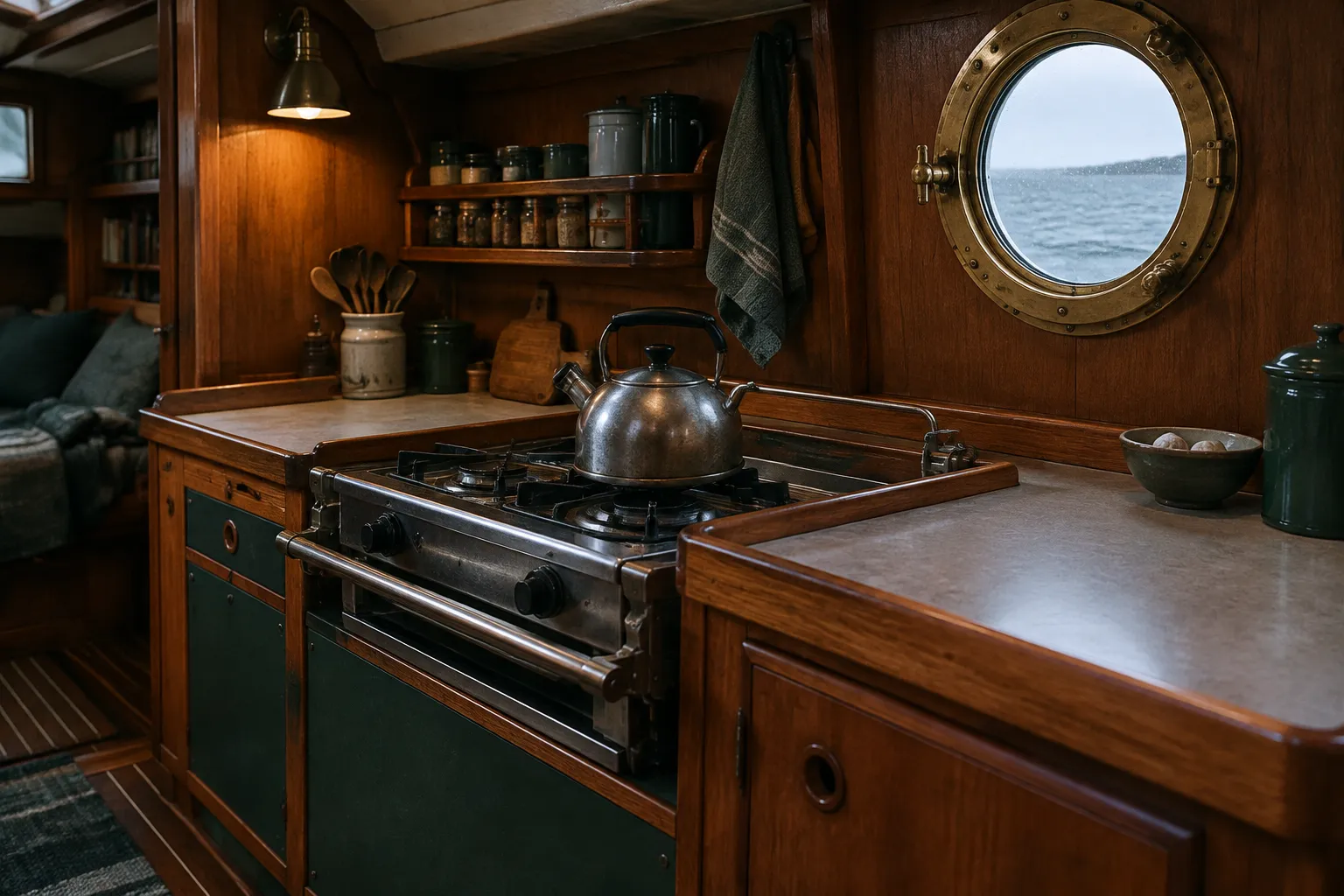
Galley: the kitchen. On Cutty Sark, Royal Museums Greenwich points visitors to the galley on the main deck. Heads: the toilet, a usage Collins records as slang, often used in the plural.
Everyday phrases with nautical roots
Royal Museums Greenwich traces several everyday phrases back to the sea:
- Know the ropes: sailors had to understand a ship's many ropes. Now it means knowing how something works.
- The bitter end: the last length of anchor chain or rope. Now it means going as far as you can.
- Three sheets to the wind: RMG traces it to a ship lurching about out of control. Now it means fairly drunk.
Sound signals
Under Rule 34 of the international collision regulations, a power-driven vessel in sight of another signals its manoeuvres on its whistle. Three short blasts mean "I am operating astern propulsion". Rule 32 defines a short blast as about one second long.
Nautical terms A to Z
The words above, and more, in one list. Linked definitions are from Collins via Dictionary.com; the rest are explained, with their sources, earlier on this page.
- Abeam: At right angles to the boat's length, directly opposite its centre.
- Aft: Towards or at the stern.
- Astern: Behind the boat, or moving backwards, stern first.
- Ballast: Heavy material, such as lead or iron, used to keep a boat steady.
- Berth: The place where a boat is moored, or a bunk to sleep in on board.
- Bow: The front of the boat (see above).
- Bowsprit: A spar sticking out from the bow, carrying the headstay as far forward as possible.
- Draught: How deep the boat sits: from the waterline down to the lowest point of the hull.
- Fender: A cushion hung over the side to stop the hull bumping a quay or another boat.
- Galley: The kitchen on board.
- Gybe: With the wind behind, the sail swings across to the other side. To gybe is to make the boat do this.
- Halyard: A line for hoisting or lowering a sail, a flag or a spar.
- Heads: The toilet on board.
- Heel: Of a boat, to lean over to one side.
- Helm: The tiller or wheel, and the gear, used to steer the boat.
- Knot: A unit of speed: one nautical mile per hour.
- Leeward: The side the wind is blowing towards. The opposite of windward.
- Luff: The front edge of a fore-and-aft sail. To luff up is to steer into the wind until the sails flap.
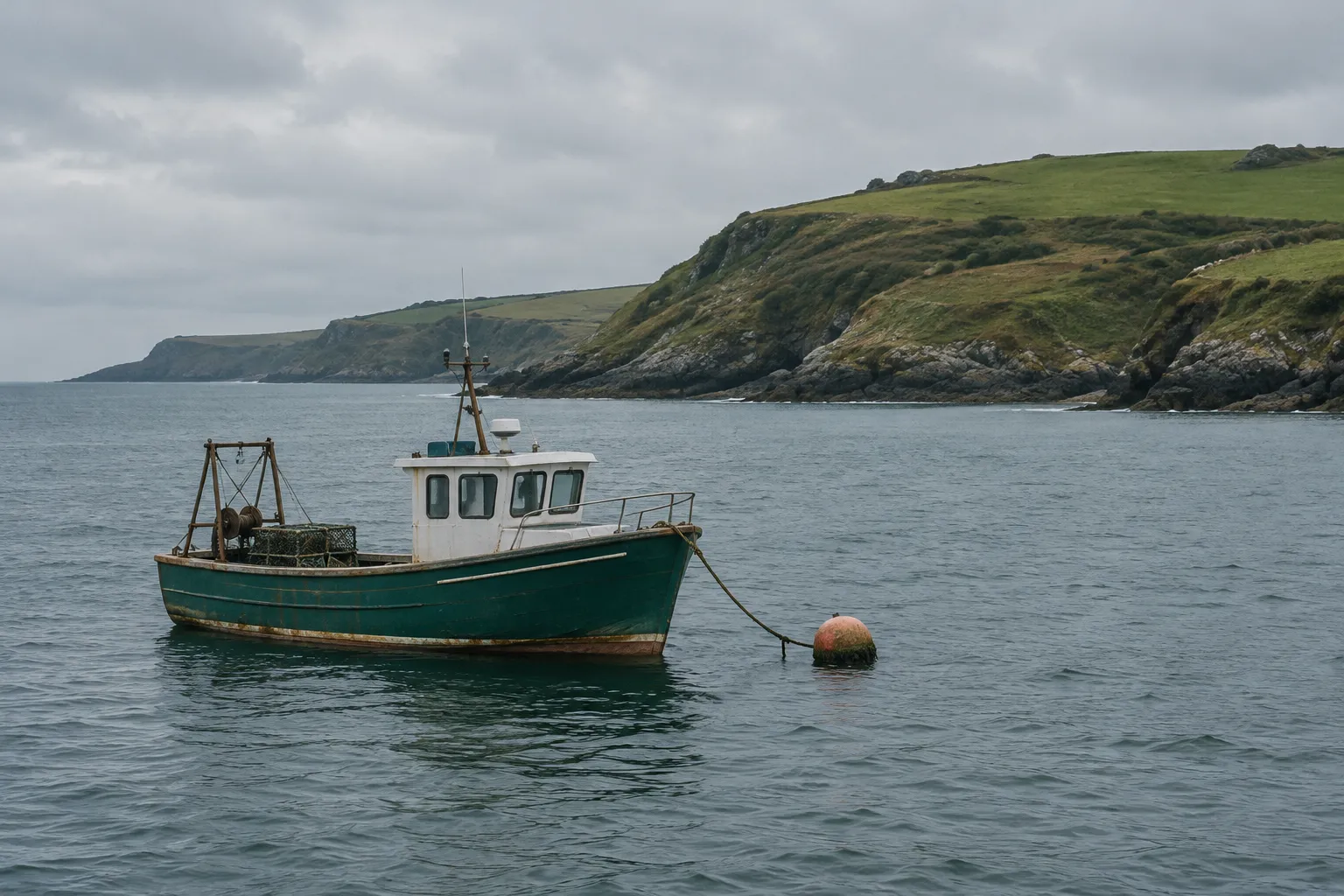
- Mooring: A place to tie a boat up, or a permanent anchor with a buoy that boats tie on to.
- Nautical mile: 1,852 metres in UK law.
- Port: The left side of the boat as you face forward.
- Reef: To make a sail smaller by gathering part of it in.
- Sheet: The line that sets a sail at its angle to the wind. It is a rope, not a sail.
- Starboard: The right side of the boat as you face forward.
- Stern: The back of the boat.
- Tack: To turn the bow through the wind, so the wind comes over the other side.
- Warp: A rope used to move or hold a boat, such as a mooring line run ashore.
- Windward: The side the wind is coming from.
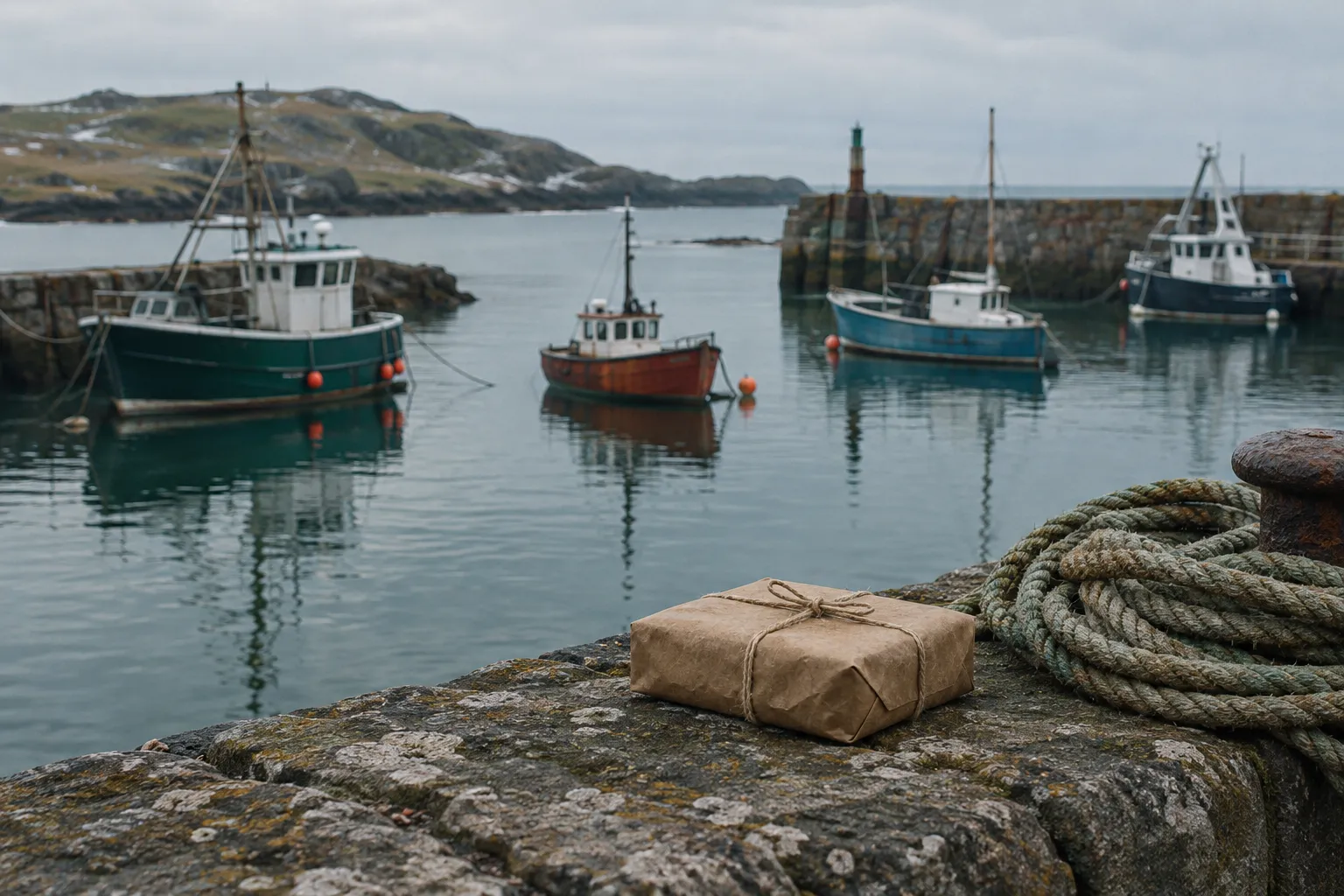
Know someone who speaks fluent sailor? Our guide to gifts for sailors has 25 ideas, and we can print their own boat from a photo.
Sources
- Collins English Dictionary via Dictionary.com (each definition linked in the text)
- Royal Museums Greenwich: port and starboard
- Royal Museums Greenwich: knots
- Royal Museums Greenwich: nautical origins of everyday phrases
- RYA: points of sail
- International Regulations for Preventing Collisions at Sea (US Coast Guard text)
- Territorial Sea Act 1987
Craig Fearn runs Still & Wake. He writes the guides and journal.