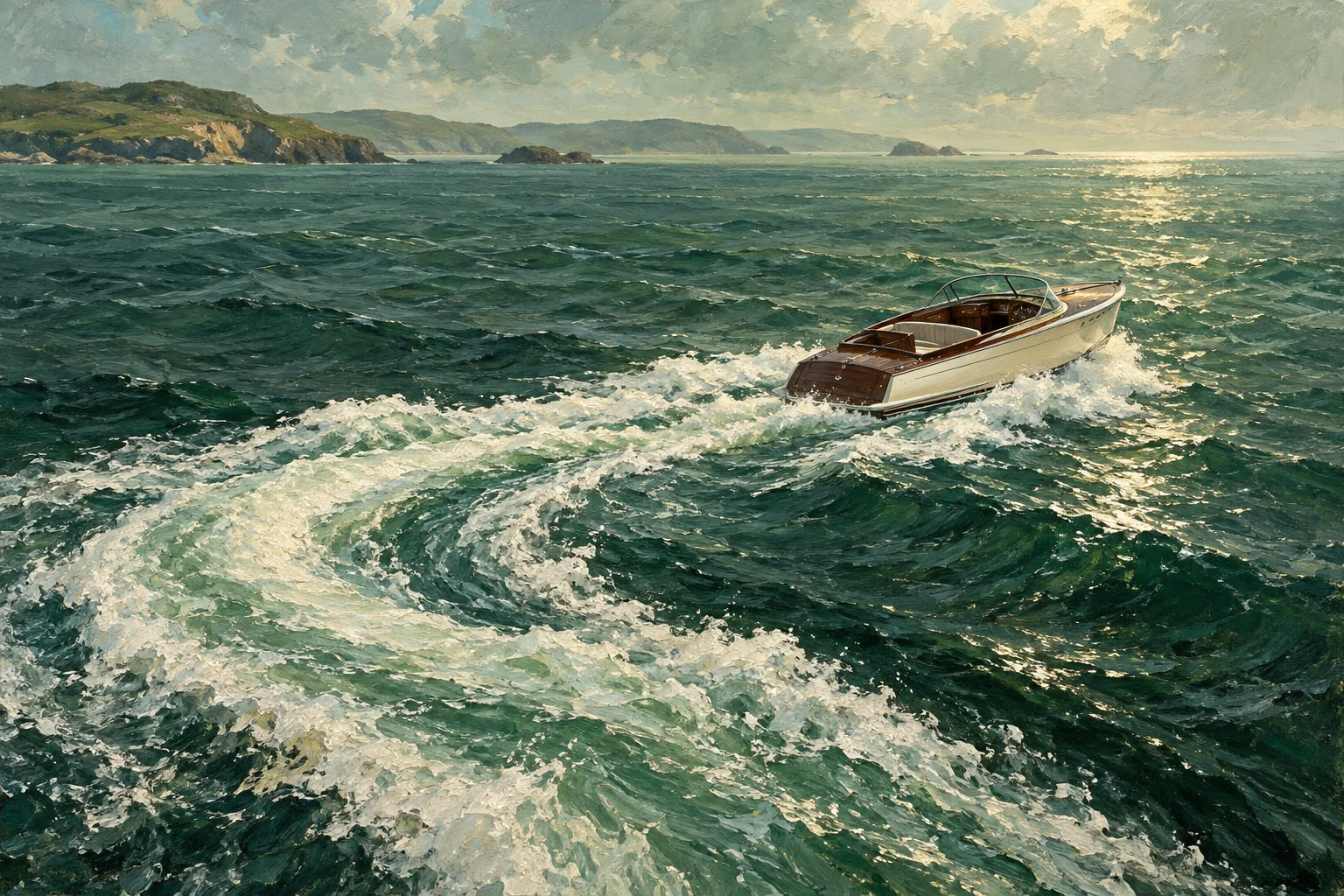
Show the profile that makes the boat recognisable
Cabin cruisers, sportsboats and classic launches have different visual signatures. A broadside view shows a long hull and window line clearly. A three-quarter bow view gives a sense of shape and depth. A stern view may be the right choice when the cockpit, bathing platform or wake is central to the memory.
Look beyond the overall silhouette. The number and position of cabin windows, the slope of the windscreen and the fittings on deck help distinguish one boat from another. Select a photograph in which those details can be seen without zooming into a tiny subject.
At rest or underway?
A boat at a berth can make a calm and intimate portrait. Try to find separation from the neighbouring boat and leave a little water around the hull. Reflections add shape, but tangled lines and fenders can distract from the subject if they dominate the frame.
An underway picture brings the wake into the composition. Leave room behind the stern and ahead of the bow so the boat has somewhere to go. Use an existing image or ask someone in a safe position to take it; the person handling the boat should concentrate on that task.
Check bright hulls and dark windows
White gelcoat can lose detail in harsh light while the cockpit falls into shadow. Choose a photograph where you can still see shape in both. Heavy phone filters and extreme contrast can make an attractive thumbnail but a less convincing large image.
The original full-resolution file gives the upload tool the best chance of finding suitable sizes. Messaging apps often reduce files; request the original if someone else took the picture.
What to inspect in an AI portrait
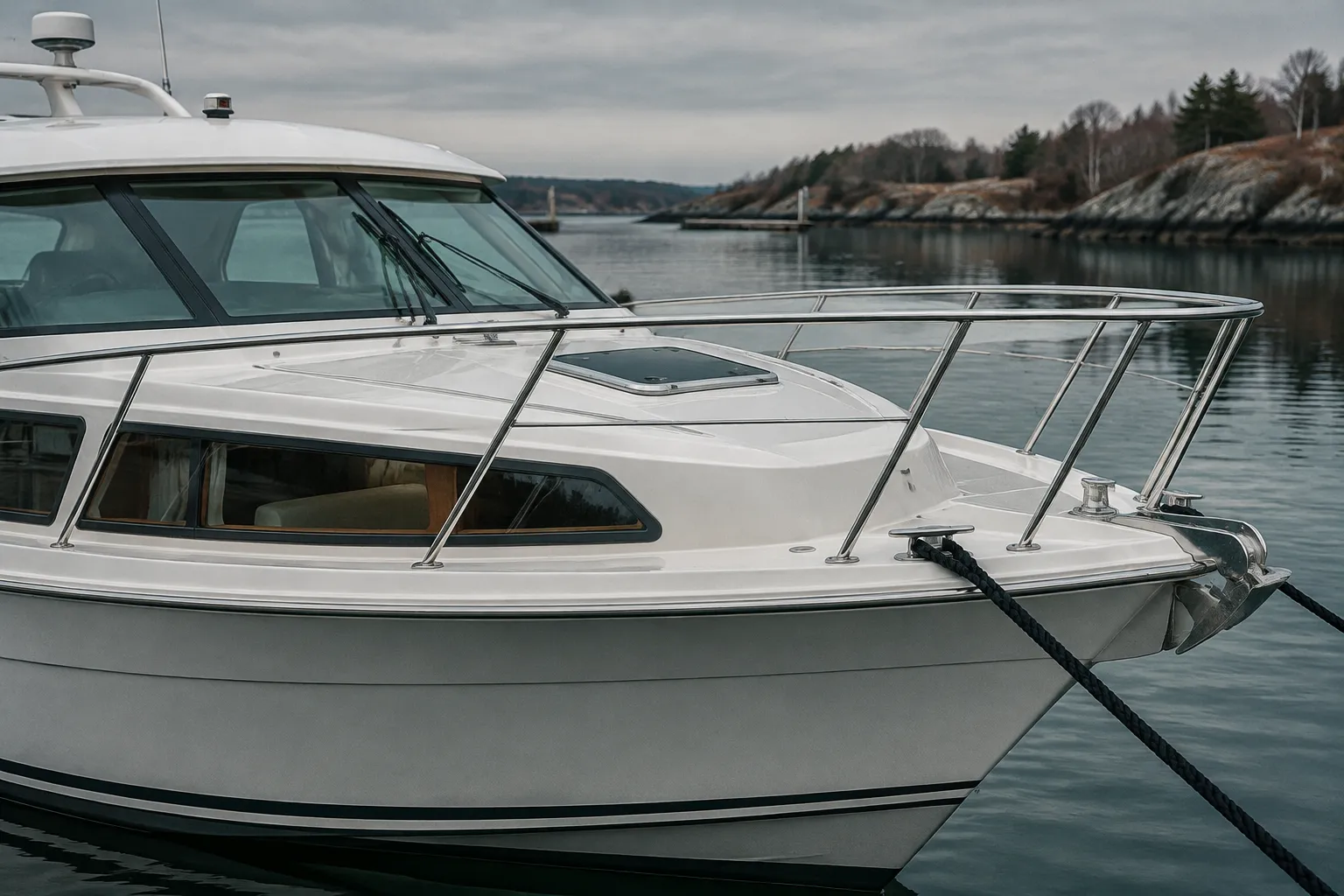
Count the windows. Check the bow rail, windscreen, engines, cockpit and hull proportions. AI can merge similar fittings, invent a rail or change the relationship between the boat and its wake. Don't choose a preview unless the important details still read correctly to you.
Try the crop before choosing the finish
Make a temporary crop on a copy of the photograph and look at it at the shape you have in mind. Keep the original untouched. Check that the bow, stern and any tall fittings still have space around them. A picture can look comfortable as a wide photograph and feel cramped when narrowed for a different wall.
Put the full view and the crop beside each other. Ask which one still feels like that boat. If the surrounding water, the berth or the wake explains the day, give it room. If there are people aboard, check whether you want them to remain part of the picture too. Those choices are worth making before selecting a size.
A direct photo print uses the photograph without an AI art treatment. Choose this route when you want the actual vessel recorded faithfully. The general photograph guide covers image quality and cropping.
Craig Fearn runs Still & Wake. He writes the guides and journal.