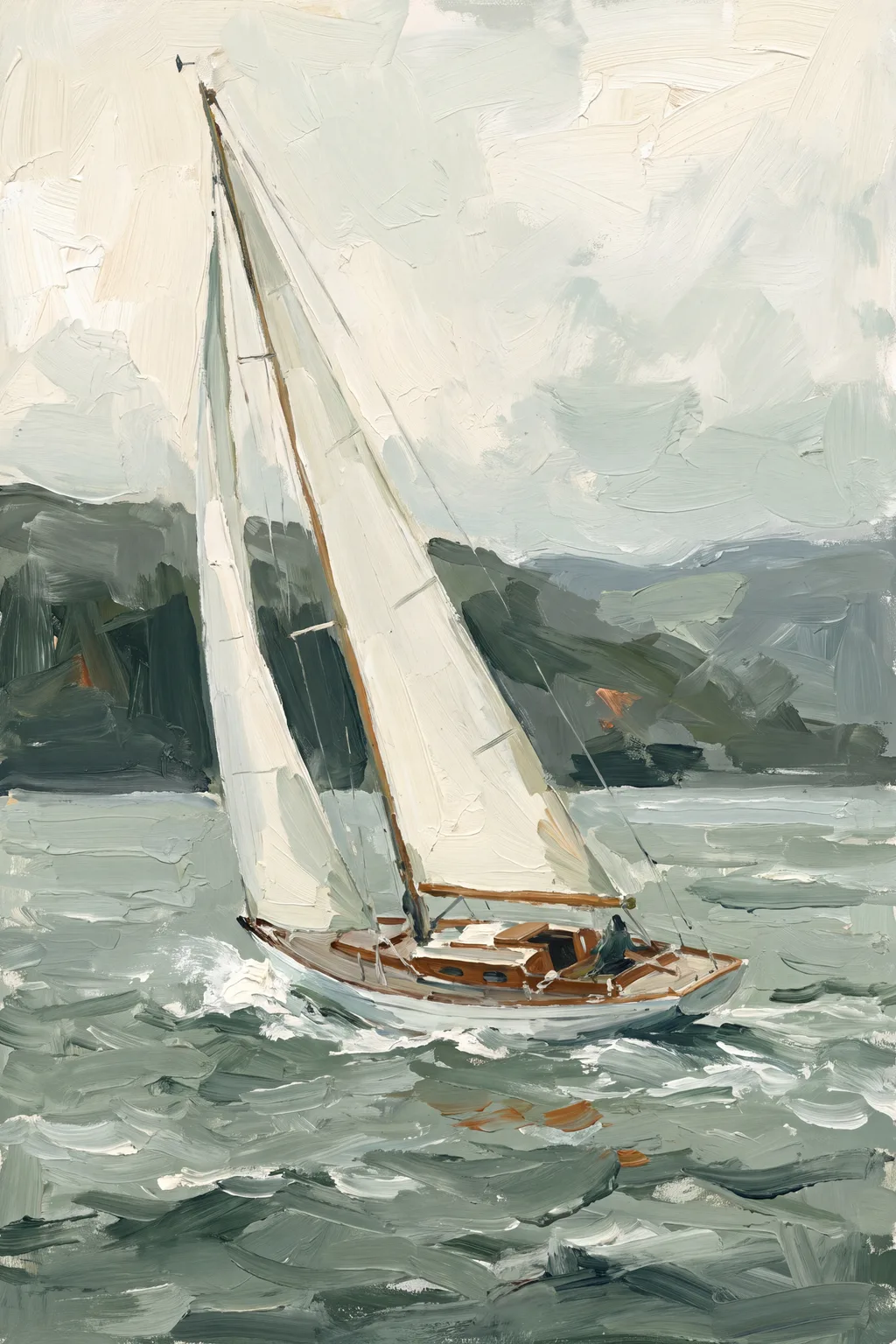
Labelled diagram: a sailing boat
The bow points left and the stern right. The mast holds up both sails, the forestay and backstay keep it standing, and the boom holds the foot of the mainsail. Under the water, the keel stops the boat sliding sideways and the rudder, moved by the tiller, steers her.
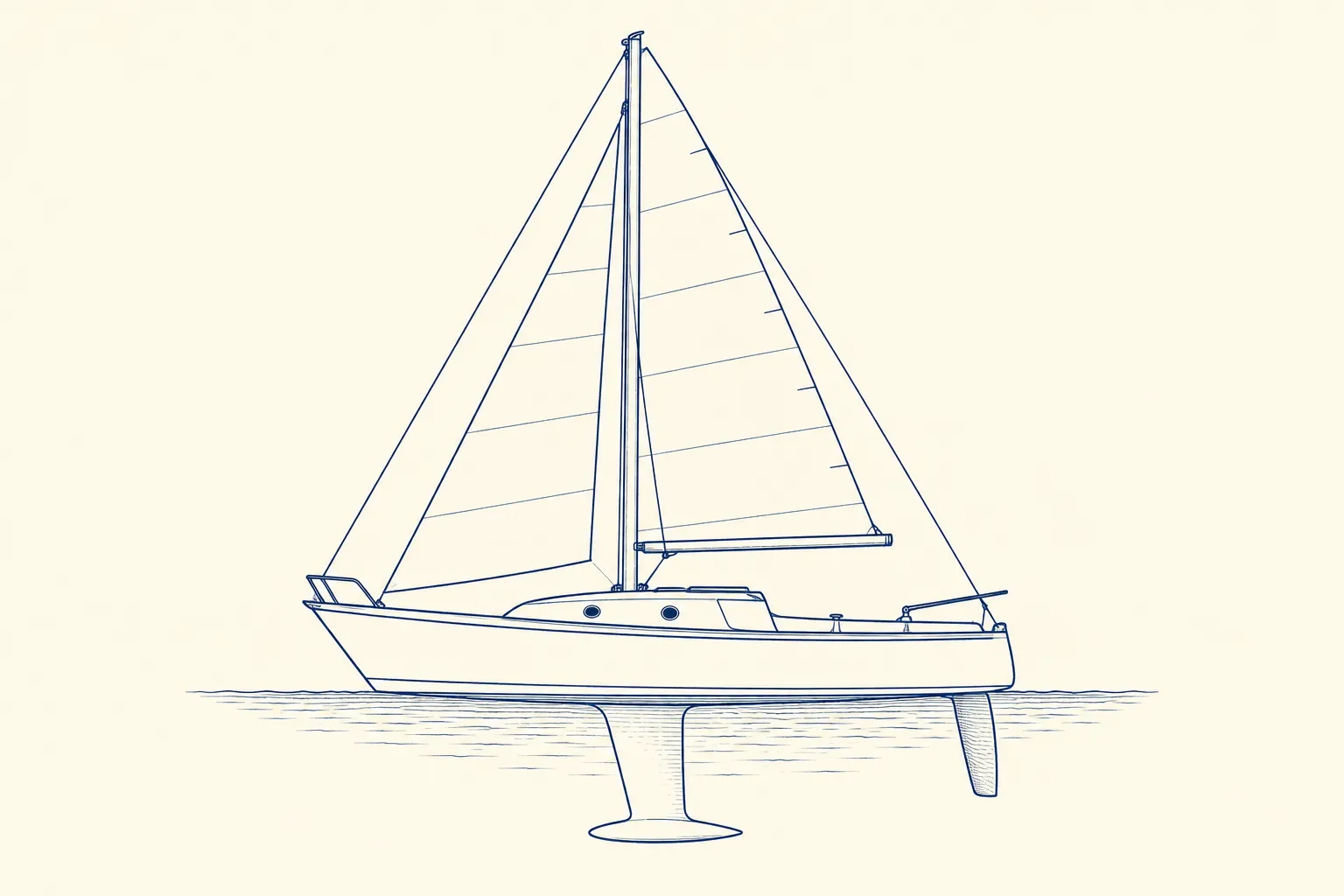 MastForestayBackstayJibMainsailBoomTillerBowSternHullKeelRudder
Labelled diagram: a motorboat
Again the bow is on the left. The windscreen and cabin sit forward, the open cockpit is behind them, and the outboard engine hangs on the transom, the flat back of the hull. The guard rail runs along the deck to stop you going over the side.
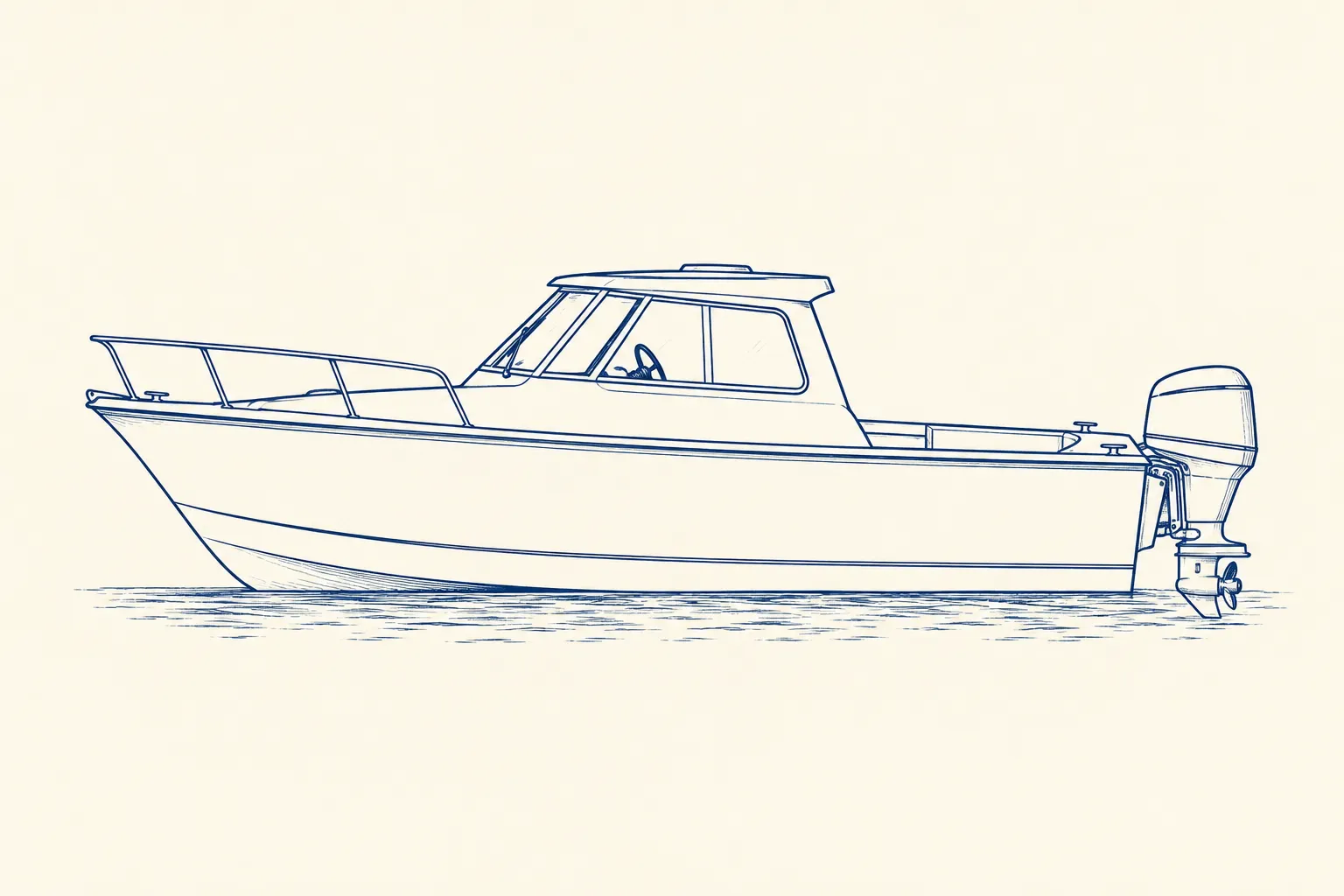 BowGuard railWindscreenCabinCockpitOutboardTransomHull
The hull: bow, stern, keel, transom, beam
The hull is the main body of the boat. The bow is the front end and the stern the back. On many boats the stern ends in a flat transom.
The keel is the main lengthwise structural member along the bottom, the backbone the frames are fixed to. The beam is the boat's width at its widest point.
If you're buying a print of someone's boat, these are the lines they'll notice first. Our sailing prints show hulls from dinghies to classic yachts.
On deck: cockpit, cleats, winches
The cockpit is the recessed area towards the stern of a small boat, where it's steered from. A cleat is a fitting with two horns, used to make a rope fast. A winch is a drum turned by a handle, used to haul in ropes under load.
The rig: mast, boom, stays and shrouds
The mast is the vertical spar that carries the sails. The boom is the spar along the bottom of the mainsail, which swings to set the sail to the wind. Stays and shrouds are the wires that hold the mast up; the forestay runs forward to the bow.
Sails: mainsail, jib, genoa, spinnaker
The mainsail is the largest, lowest sail on the main mast. A jib is a triangular sail set in front of the mast, and a genoa is a large jib whose foot can reach back as far as the mainsail's clew. A spinnaker is a large, light sail used for sailing downwind.
Steering: rudder and tiller
The rudder is the blade under the stern that steers the boat. On small boats it's moved with a tiller, a lever fixed to the top of the rudder post.
Below deck: cabin, galley, heads
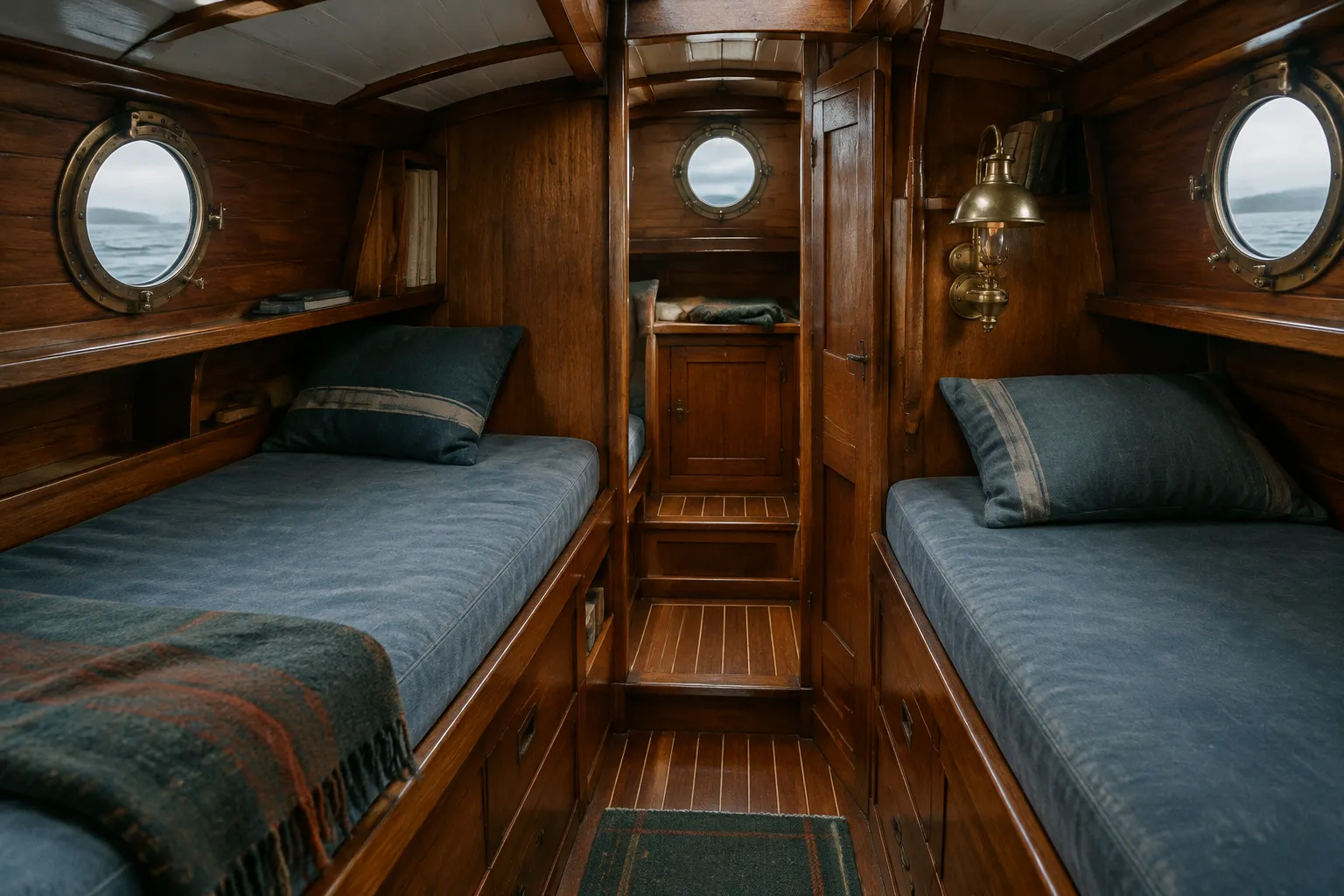
The cabin is the covered space for shelter or living. The galley is the boat's kitchen, and the heads is the toilet.
Know every part of their boat already? Then a print of it is the gift: we can print their boat from a photo. For something ready-made, our ship prints show every spar and sail.
Sources
- Definitions: Collins, as published on Dictionary.com, linked term by term above.
Craig Fearn runs Still & Wake. He writes the guides and journal.