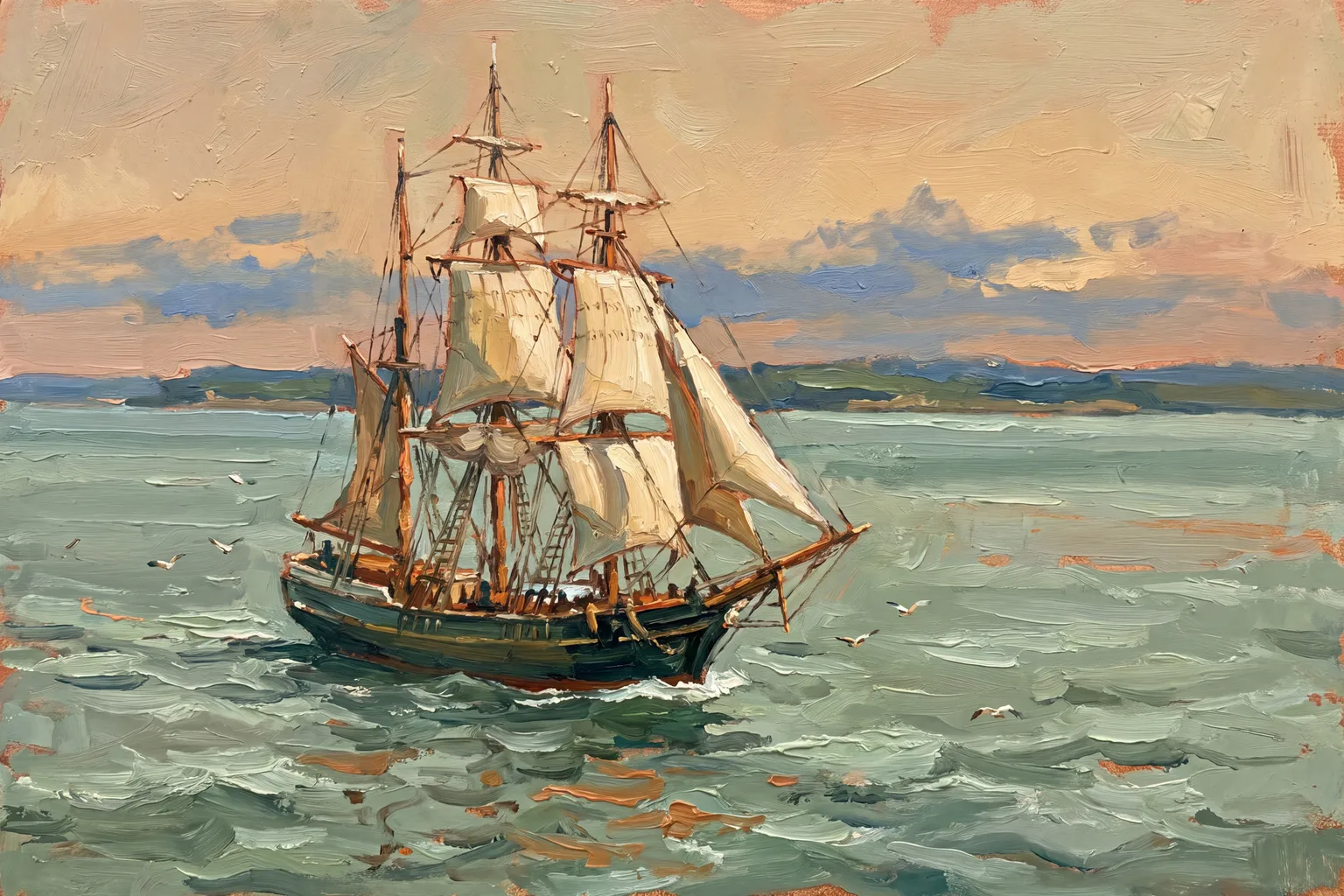
The Van de Veldes and the start of British marine painting
Royal Museums Greenwich traces British sea painting back to the Van de Veldes. Willem van de Velde the Elder and his son crossed to England in the winter of 1672 to 1673. One of the younger Willem's works, A Royal Visit to the Fleet in the Thames Estuary, is almost four metres wide. RMG quotes a curator saying their influence on British marine painting "can hardly be overstated".
J.M.W. Turner
RMG says Turner painted the sea more than any other subject, and that he "defined an entirely new marine aesthetic in British art". Tate notes his lifelong fascination with the sea, and that he stayed in Margate at the lodging house of a widow, Mrs Booth.
The Fighting Temeraire
The National Gallery's The Fighting Temeraire, dated 1839, shows the old warship being towed to be broken up. The gallery calls it one of its, and Britain's, most popular paintings.
Snow Storm
Tate holds Snow Storm – Steam-Boat off a Harbour's Mouth, exhibited in 1842.
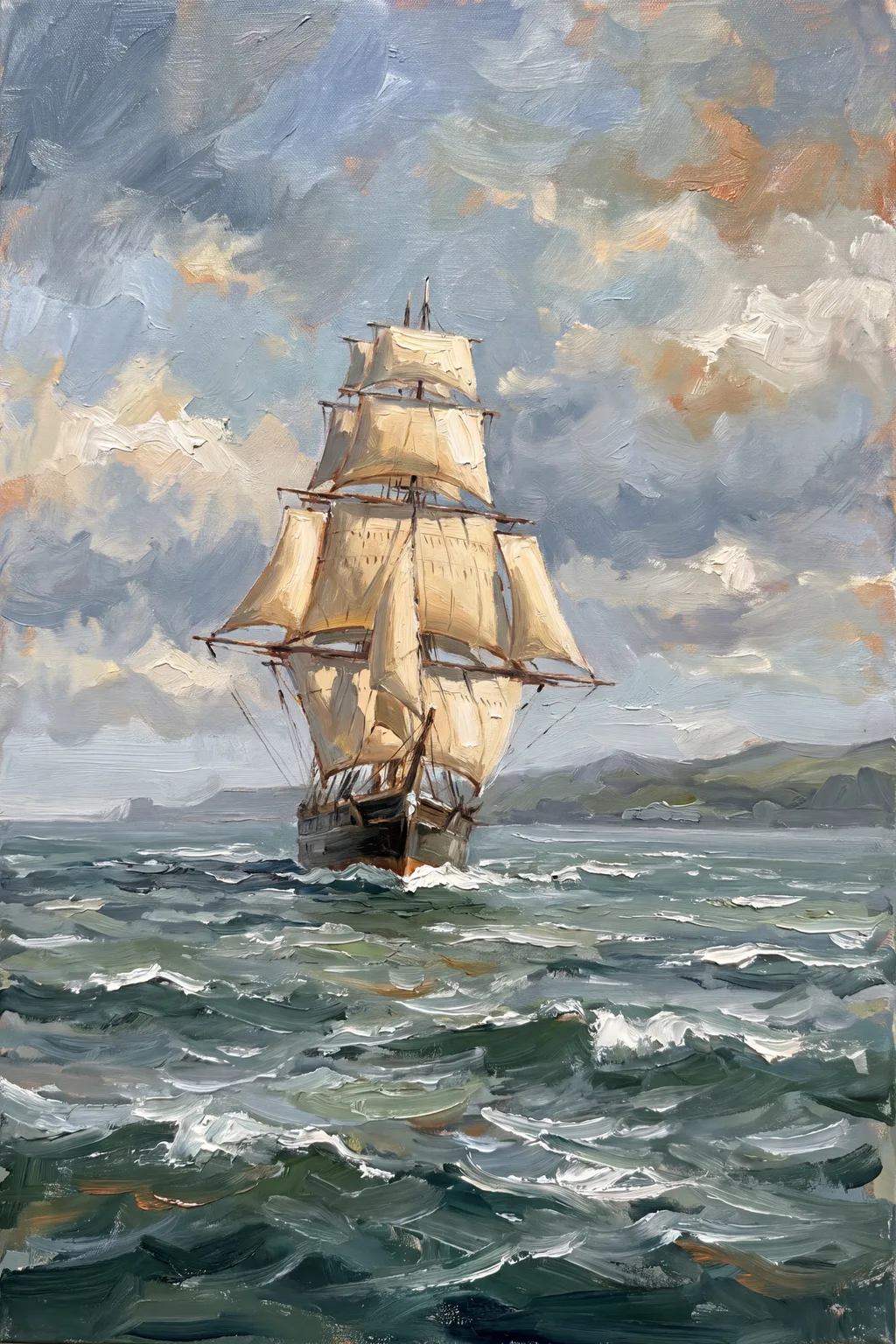
Claude Monet: boats on the Seine
French painter Claude Monet also painted boats, but the river is his setting here. The Musée de l’Orangerie’s Argenteuil (1875) shows sailing boats at anchor on the Seine, with red hulls and white sails against blue water. This is a different setting from the British sea paintings by Turner above. Look at how the masts organise the picture as well as the boats.
John Constable
Tate also holds a sea picture by John Constable: Chain Pier, Brighton, dated 1826 to 1827.
Our ship prints borrow from that long tradition of ships at sea.
How to look at a sea painting
Start with the light. Most sea pictures are really about weather: where the sun is, how much cloud there is, whether the water's calm or heaving. Then look at the horizon. A low horizon gives the sky the drama; a high one puts you down among the waves. Finally, find the boat, and notice how small it often is. Painters of the sea don't often make the ship the biggest thing in the picture.
Seeing them for yourself
The National Gallery, Tate Britain and Royal Museums Greenwich all hold sea paintings, and each lists what is on display on its own website. Check before you go, as works move between rooms and loans.
A sea picture of your own
A sea picture works hardest in a room you sit in, where the light changes through the day. If these paintings make you want the sea on your wall, see our ship prints, sailing prints or coastal prints. For a sea-loving friend, browse our nautical gifts. For the boat you own, we can make a print from your photo.
Sources
- Royal Museums Greenwich: the Van de Veldes
- Royal Museums Greenwich: J.M.W. Turner
- National Gallery: The Fighting Temeraire
- Tate: Snow Storm
- Tate: Turner's studio seascapes
- Tate: Chain Pier, Brighton
Craig Fearn runs Still & Wake. He writes the guides and journal.