Tie it, step by step
Figure of eight
A stopper knot in the end of a sheet or halyard, so the line cannot run out through a block or disappear up the mast.
- Pass the end over itself to make a loop.
- Carry on round behind the standing part (the long part of the line).
- Bring the end down through the loop and pull it snug. It should look like the number 8.
To undo it: It undoes easily, even after it has been pulled hard against a block.
Mind: Because it never binds, it can also shake loose. Check it before you rely on it.
Steps in our words, from Animated Knots by Grog.
Bowline
Puts a fixed loop in the end of a line, to drop over a post or to join two lines with two linked loops.
- Make a small loop in the rope, leaving enough end for the size of the big loop you want.
- Pass the end up through the small loop.
- Take it round behind the standing part.
- Bring it back down through the small loop, then pull tight on the standing part.
To undo it: Take the load off first. With no load on it, it unties easily; with the boat pulling on it, it will not.
Mind: Not the best mooring knot: it cannot be tied or untied with a load on the standing part, and you need slack in the line to lift the loop off a bollard.
Steps in our words, from Animated Knots by Grog and Colin Jarman on Living on a Narrowboat.
Round turn and two half hitches
Makes a line fast to a ring, a post or a rail, and can be undone with a load on it.
- Pass the end of the line round the bollard, stake or dolly, or through the ring, so it comes back towards you.
- Take it round once more. The line now wraps the post twice: that is the round turn, and it holds the boat while you tie the rest.
- Take the end over the standing part (the length that runs to the boat), round it, and back through between itself and the round turn. That is the first half hitch. Pull it snug.
- Go round the standing part again, the same way, and tuck the end through between itself and the first hitch. That is the second half hitch. Pull everything tight.
To undo it: Pull the end back out of the two half hitches. The round turn still holds the boat, and you can ease the line round the post to let her go gently.
Steps in our words, from Colin Jarman on Living on a Narrowboat and Animated Knots by Grog.
Clove hitch
A quick hold on a rail or post, for example to hang a fender, then made safe with two half hitches.
- Pass the end of the rope round the rail or post.
- Carry on over the standing part and round the rail a second time.
- Thread the end under itself and pull tight.
- To hold a fender, add two half hitches round the standing part once the height is right.
To undo it: Take the half hitches off, then ease the two turns apart.
Mind: On its own it can slip, and it can also jam. Do not moor a boat with it.
Steps in our words, from Animated Knots by Grog.
Reef knot
Ties the two ends of one line round something soft, such as a sail cover or a rolled sail.
- Cross the left end over the right and tuck it under, as in the first half of tying a shoelace.
- Cross the same end over again and tuck it under, then pull both ends tight.
- Check it is not a granny knot, which is all too easy to tie by crossing the wrong way the second time.
To undo it: Undo the two crossings in turn.
Mind: Never use it to join two ropes that will take a load. It can capsize and pull undone.
Steps in our words, from Animated Knots by Grog.
Sheet bend
Joins two ropes, including two of different thickness.
- Make a bight (a U-shaped bend) in the end of the thicker rope and hold it.
- Pass the end of the thinner rope up through the bight.
- Take it round behind both parts of the bight: the tail first, then the standing part.
- Tuck it under itself and pull tight. Both short ends should finish on the same side of the knot.
To undo it: Take the load off, then undo the tuck and pull the thinner rope back out of the bight.
Mind: Leave the ends long if the join will take a heavy load.
Steps in our words, from Animated Knots by Grog.

Rolling hitch
Ties a rope to another rope, or to a pole, when the pull runs along it.
- Pass the end round the main rope to make a half hitch.
- Carry on round a second time, crossing over the first turn.
- Tuck the end between the standing part and the first turn, and pull it tight.
- Finish with a half hitch round the main rope on the other side.
To undo it: Take the strain off, open the last half hitch and unwind the turns.
Mind: The pull must run along the main rope. It will not hold on very slippery modern rope.
Steps in our words, from Animated Knots by Grog.

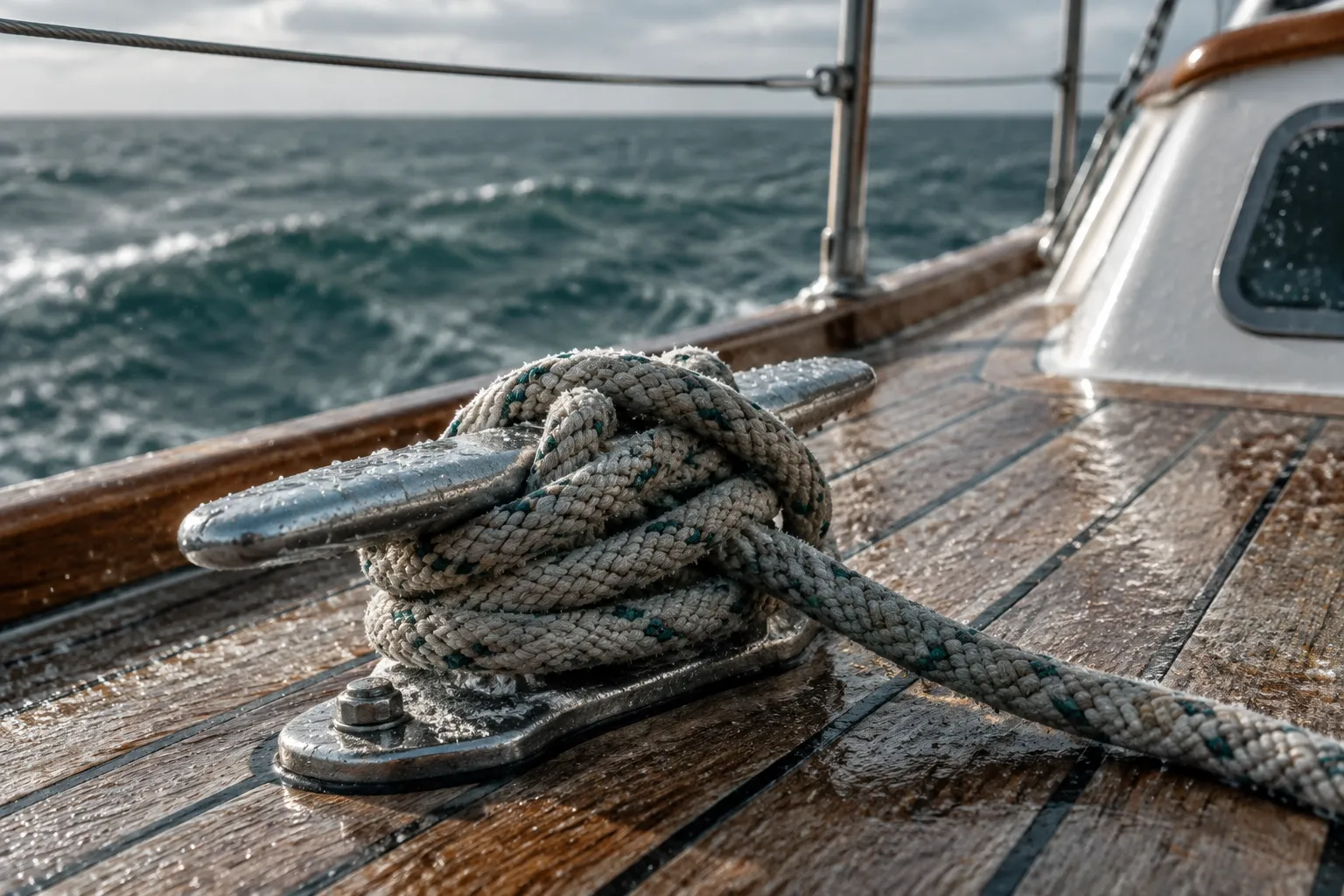
Cleat hitch
Makes a mooring line fast on a horn cleat.
- Lead the line to the far horn of the cleat first, not the near one, and take it round.
- Take it round the other horn, then back across the middle.
- Make several more figure of eight turns over the horns.
To undo it: Unwind the figure of eight turns. With no half hitch locking it, it lets go under load.
Mind: Do not start with a full round turn under the first horn: it can jam if the line goes slack and then takes up again.
Steps in our words, from Animated Knots by Grog.
How to use the cards
Each knot shows what it is for, the steps, how it comes undone and anything to watch for. Press the print button under a knot for an A4 card with every step on it. Set the printer to actual size: the ruled line at the foot of the card is 50 mm when it has printed true.
Where the steps come from
Every step is our wording of the written steps and notes on Animated Knots by Grog, a site of step-by-step knot animations. Each knot links to its own page there, so you can watch it tied. Practise at home with a short length of rope before you need a knot on the water.
Two warnings from the source
The reef knot is for tying round something, like a sail cover. Never use it to join two ropes that will take a load: it can pull undone. Use a sheet bend for that. And the clove hitch can slip and can jam, so on its own it is not a mooring knot.
Sources
- Animated Knots by Grog, boating knots and each knot's own page, read 30 October 2026
Craig Fearn runs Still & Wake. He writes the guides and journal.