Force 3: Gentle breeze
10 knots is inside force 3's band of 7 to 10 knots.
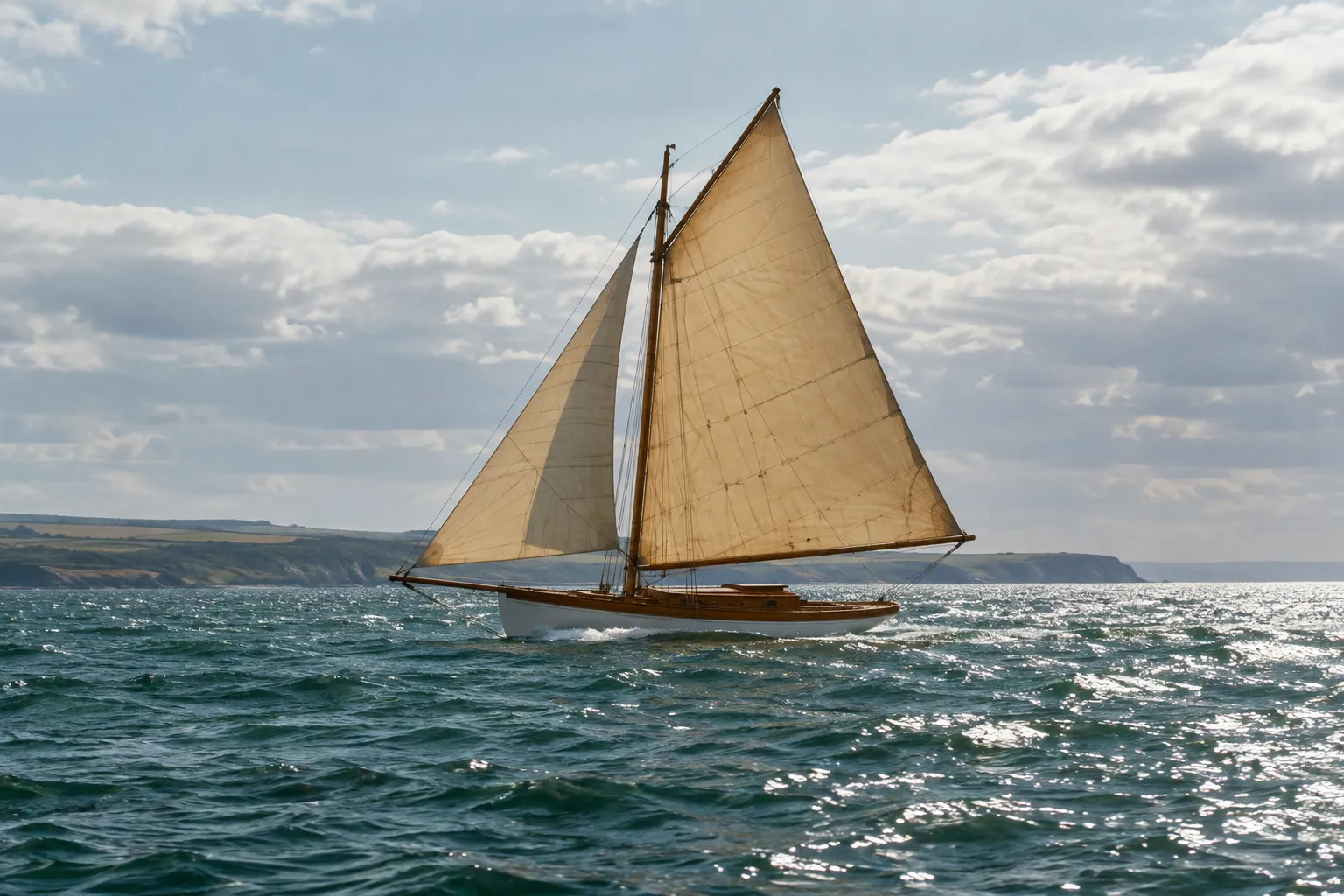
Sea: Slight. Probable wave height 0.6 m, probable maximum 1.0 m, in the open sea.
The Beaufort scale
| Force | Knots | m/s | Term | Waves (m) | Sea |
|---|---|---|---|---|---|
| 0 | <1 | <1 | Calm | - | Calm (glassy) |
| 1 | 1-3 | 1-2 | Light air | 0.1 (max 0.1) | Calm (rippled) |
| 2 | 4-6 | 2-3 | Light breeze | 0.2 (max 0.3) | Smooth (wavelets) |
| 3 | 7-10 | 4-5 | Gentle breeze | 0.6 (max 1.0) | Slight |
| 4 | 11-16 | 6-8 | Moderate breeze | 1.0 (max 1.5) | Slight - Moderate |
| 5 | 17-21 | 9-11 | Fresh breeze | 2.0 (max 2.5) | Moderate |
| 6 | 22-27 | 11-14 | Strong breeze | 3.0 (max 4.0) | Rough |
| 7 | 28-33 | 14-17 | Near gale | 4.0 (max 5.5) | Rough-Very rough |
| 8 | 34-40 | 17-21 | Gale | 5.5 (max 7.5) | Very rough - High |
| 9 | 41-47 | 21-24 | Strong gale | 7.0 (max 10.0) | High |
| 10 | 48-55 | 25-28 | Storm | 9.0 (max 12.5) | Very High |
| 11 | 56-63 | 29-32 | Violent storm | 11.5 (max 16.0) | Very High |
| 12 | 64+ | 33+ | Hurricane | 14+ | Phenomenal |
Speeds are the Met Office's limits. The Met Office notes that the wave heights are for well-developed wind waves of the open sea, and that the sea takes time to build after the wind gets up.
We don't save what you type: it lives in the link in your address bar, so you can share it.
How to use it
Type the wind speed and pick its unit. The tool turns it into knots and finds the force whose band it falls in. The matching row in the table lights up, so you can see the forces either side.
How it is worked out
The Met Office gives each force a band of wind speeds in whole knots: force 4 is 11 to 16 knots, force 5 is 17 to 21, and so on. Because the bands are whole numbers, we round your speed to the nearest knot first. That is our rule, so 16.4 knots counts as force 4 and 16.5 as force 5.
Speeds in mph, km/h and m/s are turned into knots with the exact definitions, the same way as our knots to mph converter.
Reading the table
The waves are probable heights, with a probable maximum, for well-developed wind waves of the open sea. The Met Office warns that the sea takes time to catch up when the wind gets up. Force 9's official name is "strong gale", but the Met Office uses "severe gale" in its forecasts.
Sources
- Met Office, Beaufort wind force scale: speeds, terms, wave heights and sea state, read 30 October 2026
- BIPM, SI Brochure, Table 8: the knot, read 30 October 2026
Craig Fearn runs Still & Wake. He writes the guides and journal.